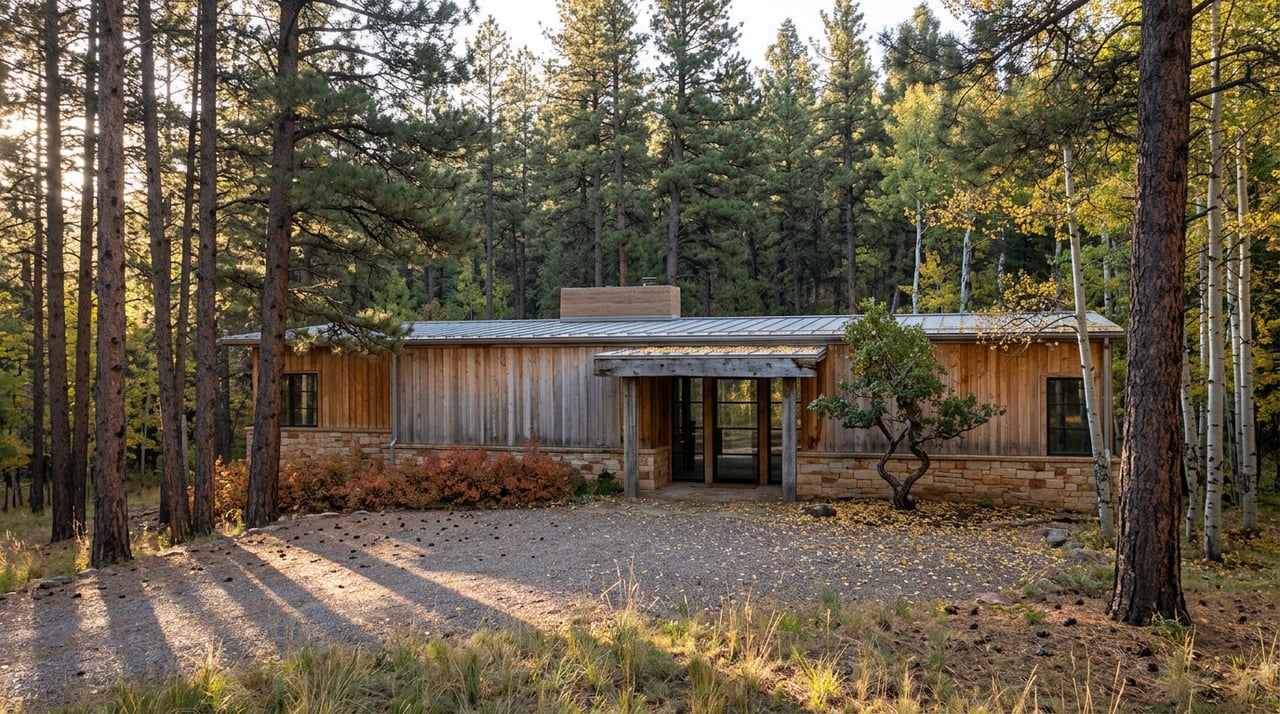
Pine Valley Fall Activities While the Reservoir Is Closed
September 17, 2026
September 17, 2026
For most of Pine Valley's history, fall started at the reservoir. Families staked out shoreline spots for the last good fishing before the campgrounds closed for the season, the six family campgrounds around the lake filled with the last RVs of the year, and the whole rhythm of the valley bent toward that stretch of water at 6,900 feet. This year, none of that is happening, and it isn't going to happen next year either.
A lightning-caused wildfire broke out in the Pine Valley Mountain Wilderness in June 2025, just above the Forsyth Trail, and burned more than 15,000 acres of private and Forest Service land before crews got it contained. The flooding that followed that fall did more damage than the fire itself, overwhelming the Pine Valley Reservoir dam and forcing officials to drain it. The U.S. Forest Service has confirmed the entire Pine Valley Recreation Area, all six campgrounds included, stays closed through the 2026 season while crews rebuild the dam to current state standards and clear hazard trees that could come down on anyone still using the site. Hazard tree removal alone is expected to run into 2027.
That's not a footnote for anyone living up here. That's the calendar.
The closure covers the reservoir and all six campgrounds around it: Dean Gardner, Equestrian, and Yellow Pine, which normally take reservations, and Mitt Moody, Crackfoot, and Ebenezer Bryce, which used to run first-come, first-served. Even before the fire, the reservoir was already a limited-use lake restricted to shoreline fishing, with swimming, boating, and paddleboards never allowed, so whenever the site reopens it won't be coming back as the kind of lake day some visitors picture. Crews have already planted around 80,000 new trees as part of the rebuild, which is real progress, but the Forest Service has been clear that tree planting doesn't mean the campground is close to ready. For now, trespassing in the closed area carries fines, and the official recreation listing still shows the site as closed with no reopening date attached.
What's not closed is the trail network that surrounds all of it, and that's where the valley's fall has actually relocated.
Pine Valley sits at the base of a 50,000-acre wilderness area, and the trails into it were never part of the campground closure. If the reservoir used to be the destination, the ridgelines above it have become the fallback plan, and for a lot of residents, the better one.
| Trail | Round trip | What you get |
|---|---|---|
| Whipple Trail to Summit Trail | 16 miles | Signal Peak, at 10,365 feet the highest point in Washington County, with views stretching toward the Grand Canyon and Nevada |
| Browns Point Trail | 7 miles | A moderate overlook of the valley floor and the surrounding peaks, including a clear vantage on the reservoir rebuild below |
| Forsyth Trail | 4 miles | An easier, family-friendly route through meadows and aspen groves, late-summer wildflowers still holding on |
| Blue Springs Trail | shorter loop | A natural spring and dense vegetation, the kind of hidden spot that doesn't show up on the tourist lists |
The Forsyth Trail deserves a second look, since it's the same drainage the fire started in. Hiking it now, past new growth and the meadow sections that survived, is less a workaround than a way of watching the recovery happen in real time. Browns Point does something similar from a distance, putting the dam reconstruction and the channel crews are building around the reservoir directly in your sightline instead of hiding it.
Pine Valley's actual Main Street is short, a couple of blocks, and the building that anchors it hasn't needed a single repair crew. The Pine Valley Chapel at 52 West Main Street was built in 1868 by Ebenezer Bryce, a shipbuilder by trade before he took up carpentry for the church, and the attic is framed like a ship's hull turned upside down. It's still an active chapel, still gives tours most days, and it's one of the oldest continuously operating LDS chapels anywhere. The detail that tends to surprise people who've lived here for years: one of the six closed campgrounds down at the reservoir is named Ebenezer Bryce, after the same man. The valley's oldest structure and its newest construction zone share a name.
For food, most residents aren't eating inside the village itself, they're driving Highway 18 through Central and Veyo on the way up or down the mountain, where Wild Thyme Bistro at Trees Ranch, Brandin' Iron Steakhouse, and Main Street Cafe do the actual daily business. None of that changed with the closure. If anything, the corridor has become busier, since it's now doing double duty as both the dining stretch and the detour route for anyone who used to end a hike at the reservoir and now ends it somewhere else.
Pine Valley Days ran in July like it always does, and Mountain Music Nights carried through the summer at venues around the valley that have nothing to do with the reservoir. What didn't have an obvious home this year was the annual Fishing Derby, which has always been staged at the reservoir itself. With the lake drained and the whole recreation area under a no-trespassing order, there wasn't a reservoir to hold it at, and residents who've hiked there for years know that the derby's usual summer weekend just didn't show up on the calendar the way it normally would.
That's the clearest sign of what's actually different this year. It isn't that Pine Valley got quieter. Pine Valley Raceway still runs its schedule of grudge nights and test-and-tune sessions, the trails are busier than usual, and the Main Street corridor through Central and Veyo hasn't slowed down. What changed is which parts of the valley are doing the work. The reservoir used to be the center of gravity. This fall, and almost certainly next fall too given the 2027 timeline on hazard tree removal, that center has shifted uphill to the trailheads and stayed put on the two blocks of Main Street that were never in the fire's path to begin with.
For anyone who's spent a summer or two coming up from St. George expecting the reservoir to be the reason to visit, that's worth knowing before you plan around it. The valley didn't lose its draw. It just moved.
If you're already thinking about what a longer stretch of time in Pine Valley might look like, whether that's a seasonal cabin or a more permanent move up the mountain, our Pine Valley neighborhood guide has the details on what that actually involves. And if you'd rather just talk it through, Holly Gardner is always up for a conversation. Schedule a free consultation whenever you're ready.
Stay up to date on the latest real estate trends.

Get assistance in determining current property value, crafting a competitive offer, writing and negotiating a contract, and much more. Let Holly guide you through your home-buying journey.