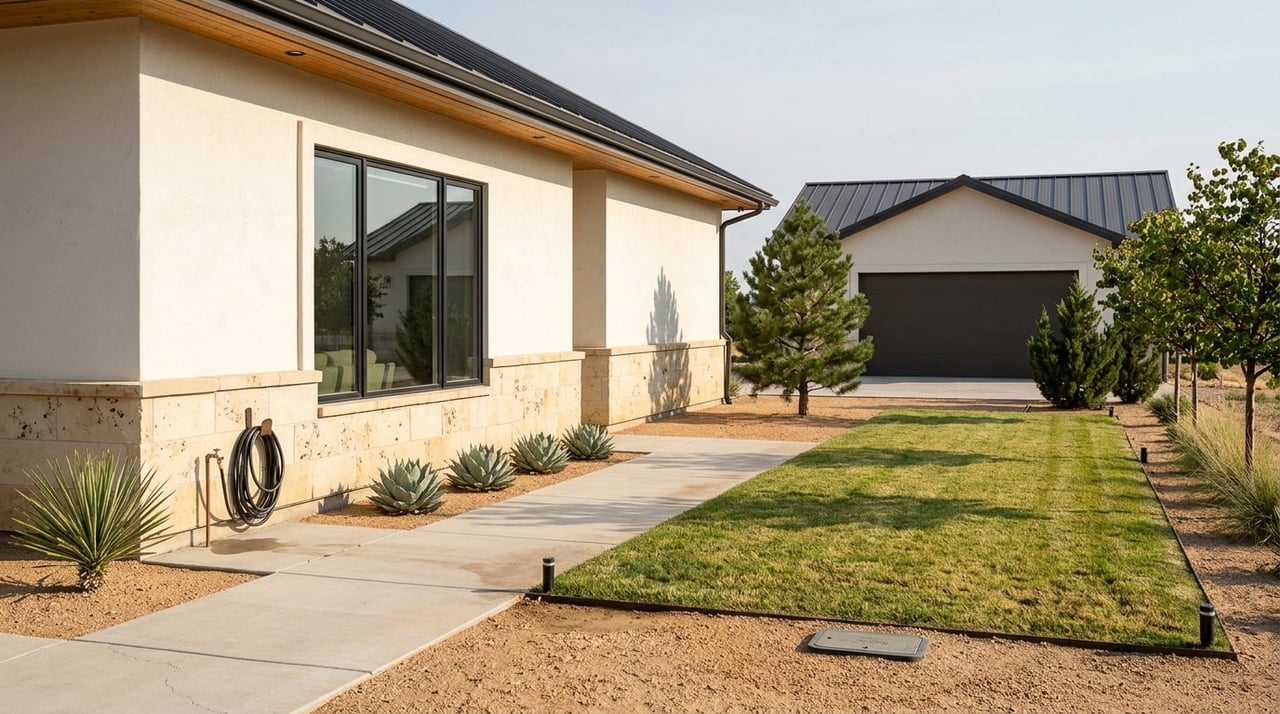
Washington Fields Small Acreage: A Buyer’s Guide
July 9, 2026
July 9, 2026
If you are drawn to Washington Fields, chances are you want a little more elbow room without feeling too far from everyday convenience. That is a common goal here, but the area can be more nuanced than buyers expect. In Washington Fields, “small-acreage living” can mean anything from a larger subdivision lot to an estate-style parcel with a more open setting. This guide will help you understand what that looks like, what to verify before you buy, and how to match the property to the lifestyle you actually want. Let’s dive in.
Washington Fields is best understood as a transition landscape, not one uniform property type. Washington City planning documents describe the area as a place where agriculture has increasingly been surrounded by residential development.
The city also makes an important point about the future of the Fields. Rather than preserving a purely agricultural district forever, the focus is on preserving the open look and feel of the area. For you as a buyer, that means the appeal often comes from space, views, and a less dense setting, not necessarily a fully rural lifestyle.
One of the biggest mistakes buyers make is assuming every home in Washington Fields sits on a similar type of lot. In reality, local zoning and planning allow for a wide range of parcel sizes and neighborhood layouts.
Washington City’s general plan describes estate residential as roughly 1 to 2-acre lots. Very low density residential is roughly 1/2-acre lots, while the city’s more typical single-family pattern falls into lower-density residential categories.
The zoning code adds even more variety. Residential-agricultural zoning includes minimum lot sizes of 1/2 acre, 1 acre, 2 acres, and 5 acres, while standard residential zones can range from 6,000 to 40,000 square feet.
That matters because a property may have a more open or rural feel without actually giving you a full acre or more of usable land. In some subdivision settings, clustered layouts can create visual openness even when lot sizes are relatively compact.
Washington Fields can include both traditional subdivisions and larger lifestyle properties in the same general area. That is part of what makes the area attractive to move-up buyers who want options.
You may find a home on a compact lot with nearby open-space features and a spacious overall feel. You may also find an estate-style parcel that offers room for additional outdoor use, expanded landscaping, or a more private setup.
The key is to separate appearance from actual lot utility. A home that looks country-like from the street may still come with HOA-maintained open space rather than private usable acreage.
In Washington Fields, water is not a side detail. It is one of the most important parts of evaluating a property, especially if you want more land to landscape, maintain, or use for hobby purposes.
Washington City describes water as a scarce desert resource and points residents to watering schedules, conservation materials, and a water-efficient landscape rebate program. That alone should tell you that ongoing landscape planning matters here.
The city’s 2021 Water Conservation Plan adds more context. Since 2005, new developments have been required to install irrigation distribution lines and metering infrastructure in anticipation of a pressurized irrigation system, but that infrastructure was still dry in the 2021 update.
The same plan says the city operates a small low-pressure or flood secondary system that serves older parts of the city, while most properties use culinary water for irrigation. In practical terms, you should not assume that a larger lot comes with the same irrigation setup as the property next door.
Washington City’s irrigation department also notes that the system includes six irrigation districts or streams. The Washington County Water Conservancy District manages its secondary-water system seasonally, with turn-on around March 1 and estimated turn-off around December 1.
For you, that means a few smart questions can save a lot of surprise later:
It is easy to picture a larger lot as a simple upgrade from subdivision living. More space can absolutely be a benefit, but it often comes with more responsibility.
Washington City planning documents note that keeping the Fields open and attractive may require enough water to sustain vegetation or regular maintenance to control weeds and keep the property looking finished. In other words, low density does not automatically mean low maintenance.
That is especially important if you are comparing a standard subdivision home with an estate-style parcel. A larger property may offer more freedom, but it can also require more time, more planning, and potentially more ongoing cost.
If your dream includes horses, gardening, or a few small-scale hobby uses, Washington Fields can be appealing. Still, you should verify what is allowed instead of relying on the area’s rural appearance.
Washington City’s residential-agricultural zone is designed for low-density residential development that can include small-scale agricultural activities. Permitted uses in that zone include agriculture, family food production, and private riding stables.
That said, not every equestrian setup is treated the same way. Public or commercial riding stables and kennels are conditional uses only on properties that are five acres or larger.
This is why “horse property” is not a one-size-fits-all label in Washington Fields. A property may support a private riding setup in the right zoning district, while a larger or commercial-style use could require more acreage and additional approvals.
For smaller hobby uses, local rules still matter. Washington City allows hens only, with no roosters, on lots of 10,000 square feet or larger, with a maximum of 12 chickens and requirements for a secure coop in the rear yard.
The takeaway is simple: if a specific use matters to you, verify it before you write an offer.
Before you move forward on a small-acreage property in Washington Fields, it helps to go beyond the listing description. A little due diligence upfront can protect both your budget and your plans for the property.
Washington City says setbacks vary by zoning district and instructs owners to check easements and lot restrictions. The code also states that structures placed over drainage or utility easements may require written approval from the relevant city departments along with a recordable waiver and indemnification document.
That means a property’s buildable or usable area may be different from what you assume when you first see the parcel size. A larger lot does not always mean every portion of that lot can be used the way you want.
Here are the main items to confirm:
When you are serious about a Washington Fields property, the most useful conversations are local. Washington City Planning & Zoning, the Building Department, and the city Water and Irrigation staff can help clarify zoning maps, setback rules, service expectations, and irrigation details.
If the property is in a planned or clustered development, ask who maintains open space and landscaping. City rules for bonus-density projects can place those responsibilities on an HOA and record them against the property.
That step may sound small, but it can shape your long-term ownership experience. It affects how much hands-on maintenance you take on and what kind of outdoor flexibility you really have.
The best Washington Fields property for you depends on what “more space” actually means in your day-to-day life. For some buyers, it means a newer home with a more open feel and less density nearby. For others, it means enough land for a private riding setup, expanded landscaping, or future outdoor improvements.
A smart buying strategy starts with clarity. Decide whether your top priority is privacy, usability, hobby space, irrigation potential, easier maintenance, or a blend of those goals.
Once you know that, it becomes much easier to compare subdivision homes, larger-lot properties, and true small-acreage opportunities in a way that fits your budget and lifestyle. That is where local guidance can make a real difference, especially in an area with this much variation.
If you are exploring Washington Fields and want help sorting out lot size, zoning, irrigation, or equestrian potential, Holly Gardner offers the kind of local, hands-on guidance that can make your next move feel much clearer.
Stay up to date on the latest real estate trends.

Get assistance in determining current property value, crafting a competitive offer, writing and negotiating a contract, and much more. Let Holly guide you through your home-buying journey.